Why Does an Old Sports Injury Start Hurting Again?...
Key Highlights: Old sports injury symptoms can return years after…
Read More
Posted by Dr. Scott Wilson | 01-Jun-2026
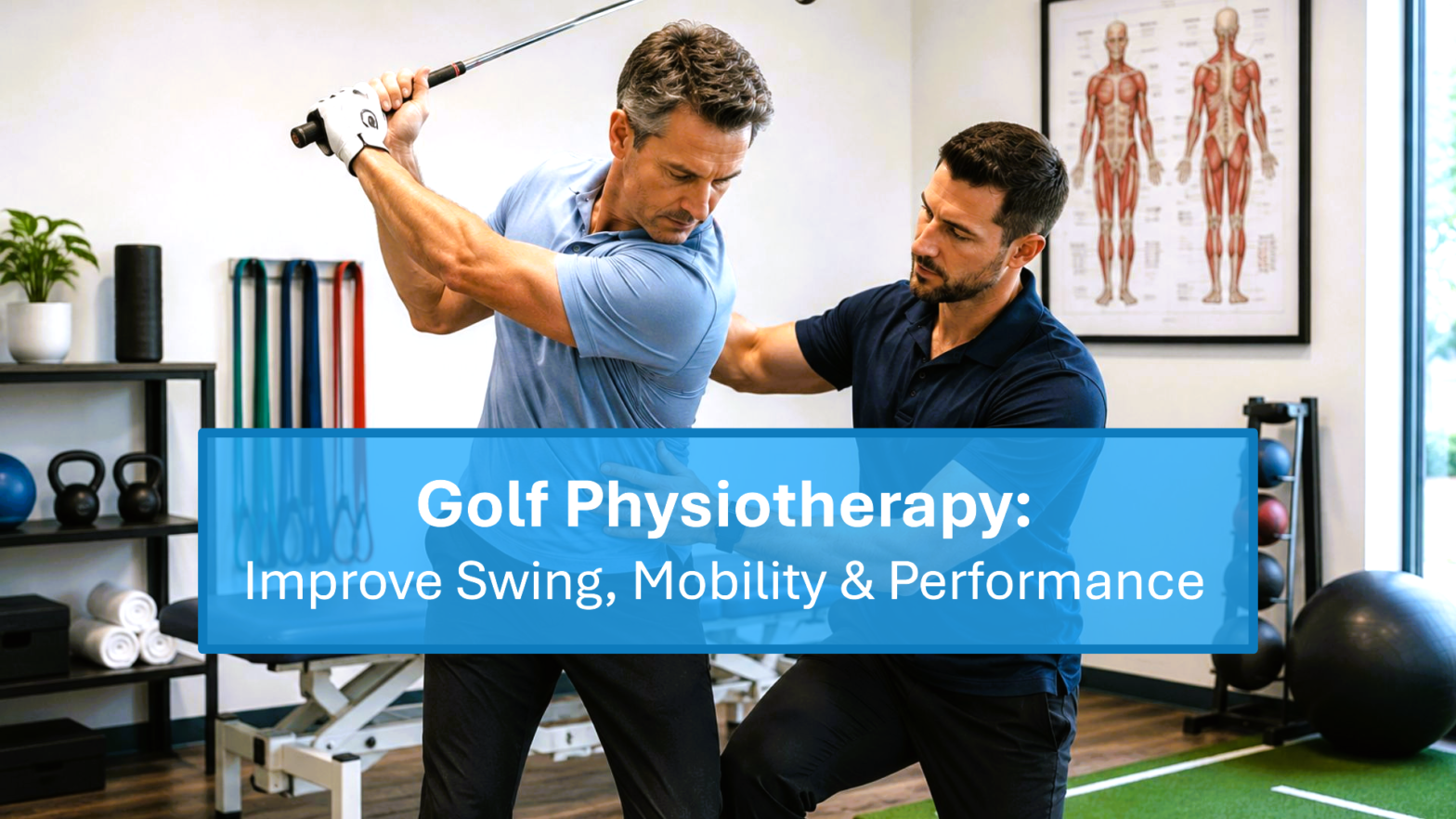
Golf physiotherapy can help improve swing consistency, mobility, and injury prevention by addressing the physical limitations affecting your movement on the course. If your swing feels forced, inconsistent, or uncomfortable, the issue may not just be your technique. Limited rotational mobility, poor stability, and compensation patterns can affect performance and place extra stress on your body. That’s where golf physiotherapy can make a meaningful difference. Many swing issues develop when your body can’t move efficiently through the positions a golf swing demands. You can spend hours at the range, but if your hips, thoracic spine, or core lack proper control and mobility, those limitations often show up in your swing mechanics. Golf physio focuses on mobility, stability, and coordination to support a more efficient, repeatable swing while reducing joint and muscle strain. Here’s what you need to know.
A consistent golf swing depends on rotational mobility through your hips and thoracic spine, along with stability through your core and lower body. When one area lacks mobility or control, your body often compensates somewhere else. That’s when issues like early extension, inconsistent contact, or lower back pain can start affecting your performance on the course.
Many golfers assume those problems come from poor technique alone. In some cases, they do. However, physical restrictions can also prevent your body from reaching the positions needed for efficient golf swing mechanics. That’s where physiotherapy for golf can help. Instead of working around those limitations, treatment focuses on improving mobility, coordination, and movement efficiency throughout your swing.
Improving movement quality can also reduce unnecessary stress on your joints and muscles over time. Clinics like Physiomed Oakville assess how your body moves for golf, including posture, hip rotation, thoracic spine mobility, joint control, and sequencing. The goal is not just to address discomfort. It’s to improve the movement patterns affecting your swing and overall performance.
Golf physiotherapy often becomes even more important as swing speed, rotation, and consistency improve. As your swing speed and consistency improve, your body faces greater physical demands, which means movement limitations tend to affect performance more noticeably. Even small restrictions in mobility or coordination can interfere with timing, sequencing, and swing consistency.
That’s why physio for golf is increasingly common among low handicaps and competitive amateurs. At that level, gains rarely come from generic flexibility or strength programs alone. Instead, targeted treatment focuses on improving your movement efficiency, core stability, and rotational mobility throughout your swing.
Golf injury physio programs also look beyond the area causing discomfort. Overuse injuries often develop when your body compensates for poor movement patterns somewhere else in the swing. Improving how force moves through your body can help reduce strain while supporting more consistent performance over time.
For golfers looking to take things further, structured programs that combine mobility, strength, and movement efficiency can support better long-term performance on the course. A dedicated sports conditioning program can also help improve your stability, coordination, and overall movement quality during your swing.
Lower back pain often develops when your body can’t distribute movement and force efficiently during your golf swing. Many golfers try to manage the discomfort by stretching their lower back, but that approach rarely addresses the underlying problem. In many cases, the issue starts somewhere else in the body.
Limited hip rotation, reduced thoracic spine mobility, and poor core stability can all increase stress on your lower back. When those areas lack mobility or control, your lumbar spine often compensates by taking on more rotation than it should handle. Over time, that added strain can affect both comfort and swing consistency.
That’s where golf physiotherapy can help. Treatment focuses on improving movement efficiency, mobility, and coordination throughout your swing rather than only addressing the painful area. As your hips and upper spine move more effectively, your lower back no longer needs to act as the fallback option. The result is often less discomfort, better movement quality, and a more stable, repeatable swing.
Golfer’s elbow often develops when poor movement patterns place too much stress on the muscles and tendons supporting your forearm. While the discomfort shows up near the elbow, the underlying issue frequently starts somewhere else in your swing. That’s why the condition often returns when treatment focuses only on the painful area.
Grip pressure, wrist mechanics, shoulder mobility, and rotational sequencing can all affect how force moves through your swing. When those movements lack coordination or control, your forearm absorbs more stress during impact. Over time, that repeated strain can affect both comfort and swing consistency.
That’s where golfer’s elbow physiotherapy can help. Instead of isolating the elbow alone, treatment looks at how your body moves throughout the entire swing. Improving mobility, coordination, and movement efficiency can help reduce strain on the elbow while supporting better long-term performance. The goal is not just temporary relief. It’s to help you return to the course with a more efficient and sustainable swing.
Trying to swing harder rarely leads to better distance for long. In many cases, it creates timing issues, disrupts sequencing, and places more stress on your joints and muscles. As movement efficiency declines, swing consistency often declines with it.
That’s where golf physio can help. Instead of focusing only on force or speed, treatment looks at how efficiently your body transfers energy throughout the swing. When your hips, core stability, and upper body work together properly, you can generate more speed without forcing extra effort.
Better movement efficiency can also help your swing hold up over an entire round. As fatigue builds, poor mobility and coordination often affect posture, balance, and control. Improving how your body moves can help you maintain a more stable, repeatable swing from the first tee to the final hole.
More golfers across the GTA are using golf physiotherapy to support performance, movement quality, and injury prevention throughout the season. Instead of waiting for pain to interfere with their game, many golfers now use physiotherapy proactively to improve mobility, swing consistency, and overall movement efficiency.
That shift reflects how physically demanding golf can become as swing speed and repetition increase. Even minor movement restrictions can gradually affect coordination, sequencing, and long-term performance on the course. Addressing those issues early can help reduce unnecessary strain and lower the risk of overuse injuries.
With multiple locations across the region, Physiomed offers golf injury physio, movement assessment, and sports conditioning programs designed to support how your body moves during a golf swing. For many golfers, staying ahead of physical limitations is easier than trying to recover from them in the middle of the season.
Your swing can only improve as much as your body allows. You can take lessons, practice regularly, and work on your golf swing mechanics, but physical limitations can still affect how consistently you perform on the course. When mobility, coordination, or core stability break down, those changes often become difficult to maintain.
Restricted hip rotation, poor thoracic spine mobility, and limited core control can all interfere with movement efficiency during your swing. If your spine doesn’t move well, your body often compensates somewhere else. Over time, those compensations can affect both performance and injury prevention.
That’s where golf physiotherapy can help. Treatment focuses on improving how your body moves so your swing feels more stable, efficient, and repeatable. Sometimes the fastest way to improve your performance is not another lesson. It’s improving the way your body supports the swing itself.
Golf physiotherapy focuses on identifying the physical limitations affecting how your body moves during the swing. Improving mobility, movement efficiency, and coordination can help your swing feel more controlled and consistent.
If your swing feels inconsistent, your lower back tightens after a round, or recurring pain keeps affecting your game, the issue may involve more than technique alone. Improving mobility, movement efficiency, and coordination can help support a more stable and repeatable swing.
To learn how golf physiotherapy can help you move better, play better, and stay on the course longer, contact Physiomed to book an assessment. At Physiomed… Healthier Starts Here.
Golf physio uses the same evidence-based principles as regular physiotherapy but applies them specifically to golf. It focuses on golf swing mechanics, mobility, movement efficiency, and injury prevention to identify physical limitations that may affect performance, swing consistency, and comfort on the course.
Yes. Golf physiotherapy can improve distance and consistency. When your hips, core, and upper body transfer force more effectively, you can generate speed with less effort while maintaining better control, timing, and balance throughout your swing and over an entire round.
No. You don’t need to be injured to benefit from golf physiotherapy. Many golfers use it proactively to improve mobility, core stability, and movement quality. It can also help reduce the risk of overuse injuries while supporting better swing consistency and long-term performance.

Key Highlights: Old sports injury symptoms can return years after…
Read More
Key Highlights: Chiropractor or physiotherapist - both may be appropriate…
Read More
Key Highlights: Pelvic floor physiotherapy can help identify symptoms that…
Read More
Key Highlights: Feeling stiff despite staying active can result from…
Read MoreKey Highlights: Golf physiotherapy can help improve swing consistency, mobility,…
Read More
Key Highlights: Physiotherapy can help manage chronic conditions by improving…
Read More